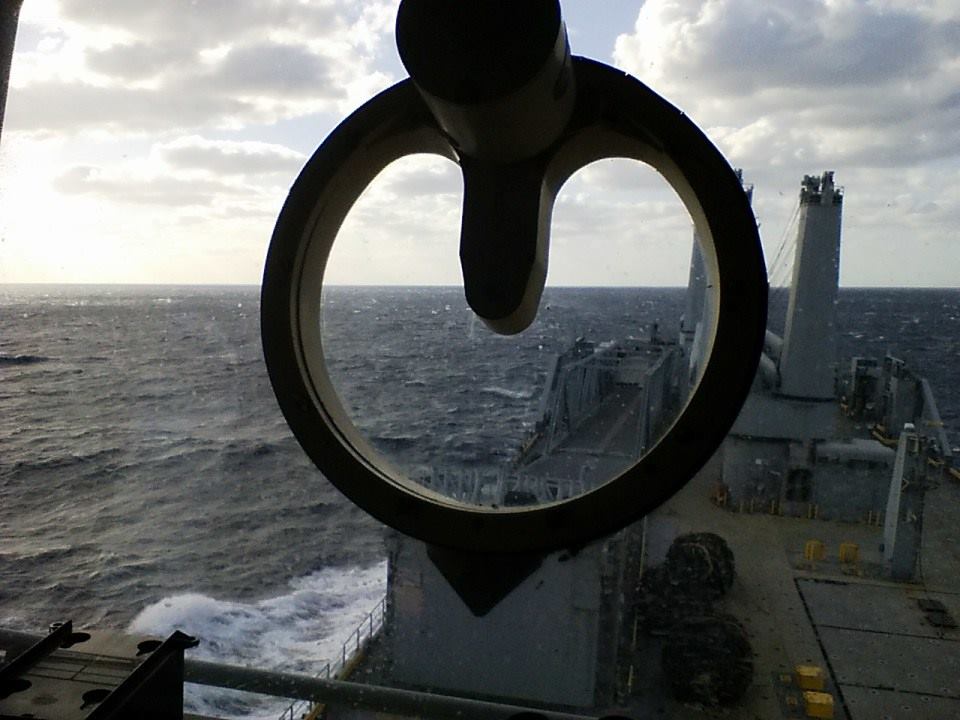
Charlie Sheldon studied at Yale University (American Studies) and the University of Massachusetts (Master’s Degree in Wildlife Biology and Resource Management). He then went to sea as a commercial fisherman off New England, fishing for cod, haddock, lobster, red crab, squid, and swordfish. Active in the fight for the 200-mile Fisheries Conservation Zone, he later worked as a consultant for Fishery Management Councils, developing fishery management plans and conducting gear development projects to develop more selective fisheries. He spent 28 years working for seaports (New York, Seattle, and Bellingham) as a project and construction manager and later as an executive. In addition to overseeing habitat cleanup projects, he worked with Puget Sound Tribes establish a system whereby tribal fishing could coexist with commercial shipping in Seattle Harbor and Elliot Bay. Then, nearly ancient, he returned to sea, shipping out with the Sailor’s Union of the Pacific as an Ordinary Seaman, Able Bodied Seaman, and Bosun. Starting with commercial container vessels, on the New York to Singapore run, he finished his career aboard naval ships for Military Sealift Command. His last gig was as bosun aboard USNS Shughart, New Orleans to New York, in 2016. Always a writer, he published Fat Chance with Felony and Mayhem Press in 2005. He began working on ideas for Strong Heart long, long ago and began serious research in 2010. These days he hikes in the Olympics whenever he can, cooks for his wife, and continues to write tales in Ballard, Washington.
The thing about having a little blog is it must be fed. When the summer comes out here, and the skies brighten and the rain stops, the trails and forest beckon. There are trails to revisit, or visit the first time, or areas off trail asking for attention, distant lakes to discover and reach, remote forest roads leading nowhere beyond which lies….? Of course, when you reach a certain age, and I fear – no, I am certain – I have reached it, you need to prepare for such excursions. Train. Walk miles, find nearby trails and hills to conquer, load a pack and climb stairs, or just walk, and walk, and walk. In the perfect world someone who wanders the woods would walk two or three hours every single day, all year, and then they would be ready for anything at nearly any age, even a greatly advanced age. I met such a man this year and he is a mountain goat, nearly as old as I am, going everywhere, on and off trail, as he has all his life. I envy him but could not keep up with him. Maybe after a year of training, and absence of injuries…
But you can write your blog in the evenings, some would say. This is true. But, to me, a blog is a strange sort of beast. On the one hand it offers a place to store tales, and ideas, and pictures, maybe even a few words about books written or envisioned, and as such, seems, to me anyway, a perfect place to store such things, whether anyone else cares to see them or not. On the other hand, in today’s monetize everything, build a mailing list, increase traffic to promote sales fever, the blog becomes a beast, a thing to be fed, its appetite endless and huge. When fun stories rise, or events beckon, the blog is fun, a place to record things, but when the money and traffic and out-there self promotion animal springs to life the blog becomes a monster, something loathed and avoided.
Maybe, too, this is all a function of two years of covid reaction and then the start of a European land war with the attendant media hype, lies, and hysteria filling all the airwaves and screens.
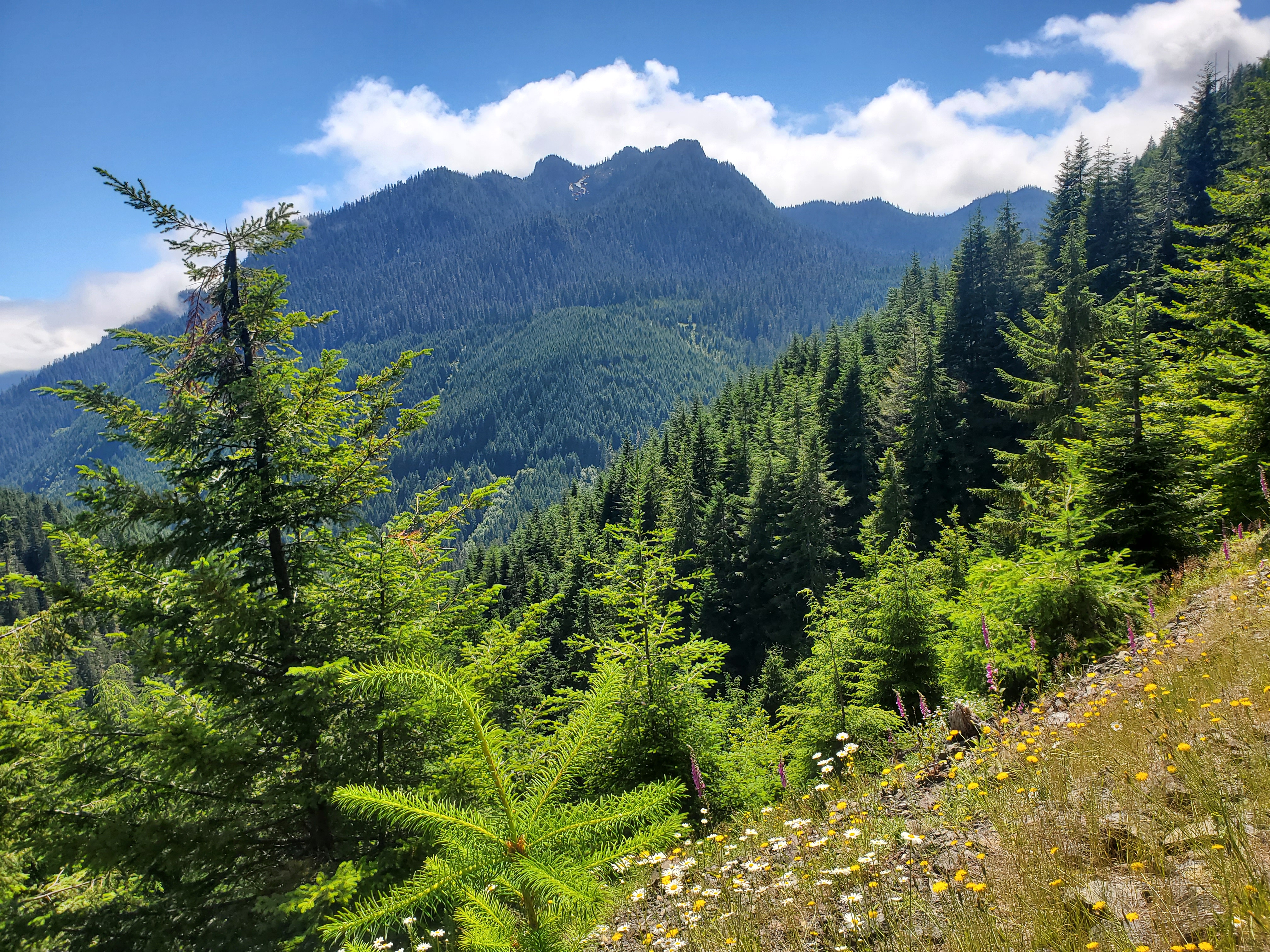
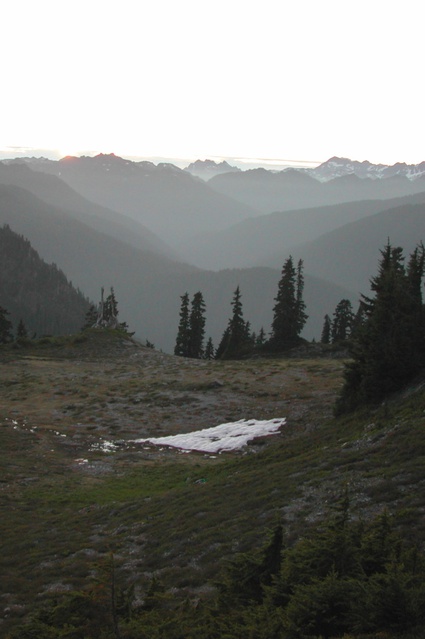
Then the forest beckons, the high and lonely places, difficult to reach, painful to achieve, but then, on the way and when arrived, silent but for the sounds of the wind, streams, insects, and animals. These are places that are still, InReach Mini2 aside, out of wifi range, phone range, web range.
Thank God.
There is a story I have been playing with now for two years, ever since I finished Totem as a matter of fact, maybe even another series, set in the future, so you can call it science fiction if you like. Whatever time I have spent with a pen and paper, or a keyboard and a screen, has been jotting notes and doing research on matters related to things future, plus the difficult task of trying to imagine a near future that might be realistic, which in these days of plagues and crisis and rage is hard to do.
All of which to say, this feeble little blog has gone dormant for half a year, now. But it is not dead, mainly because I find this a nice way to store stuff that I enjoy.
So, just about a year after the Ever Given went aground in the Suez Canal, blocking traffic for days and creating chaos in the supply chain, a sister ship, the Ever Forward, somehow missed a small turn in the channel in the Chesapeake Bay while departing Baltimore and grounded in mud.
These ships are huge. They are 1300 feet long, nearly 200 feet wide, weigh 140,000 tons, and draw at least 40 feet of water when even partially loaded. They are the largest container ships built. Why one of these monsters was going to Baltimore is a question in itself. Baltimore is way up the Bay, far from the ocean, a relatively small East Coast container port. I was posted on a Military Sealift Command ship in Baltimore in 2015 and could see the container cranes from the ship, so I know where the Forward must have berthed. I imagine, if this was the first visit to the Port, there was some kind of event hosted by the Port, a celebration, executives with smiles and flowers and the press, “Oh, look, we can handle these ships, aren’t we the best?”
Based on videos and reports it seems the ship was traveling between 8 and 9 knots coming down the channel, coming south. The channel swings to the right, to starboard, maybe 15 degrees, but the Ever Forward just kept going straight. In the channel the water depth is 50 feet, but outside the channel the depth is 30 feet rising to 24 feet to less than 20 feet. The ship is now well off the channel, in the mud, fully, bow to stern. The depth at the bow is only 17 feet. This means that the hull of the ship, which is at least 40 feet from the keel to the water surface, somehow plowed into the sediment for all 1300 feet. Now the ship sits in the mud, with, quite likely, half that 40-foot draft not in water but in the mud beneath the water.
This is, actually, hard to imagine happening, unless that sediment was very soupy indeed. If the ship drove into the mud, pushing it aside as it drove forward, the mud would have to be pushed aside as well, meaning, forming a hump next to the hull. A rough calculation suggests this 140,000 ton ship might have pushed aside over 100,000 cubic yards of mud.
When the ship was coming south, the ship had to be under the command and control of a Chesapeake Bay Pilot. When I was sailing we always -always – took aboard a pilot when entering a port, any port. The pilot gives the commands, engine speed, wheel commands. One would think the pilot gave a command to turn the ship as the channel turned, but only the voice recorder will tell the real story. It is however likely the pilot, whoever he or she was, had rarely if ever been operating a ship that size, that slow to heed rudder commands.
Anyway, the ship went hard aground and now sits in the mud. Two dredges are working to remove the sediment from around the ship, the largest using a clam bucket that can hold 65 cubic yards at a time. Rough math, again – if it takes 15 minutes to drop the bucket, close it, bring it up, swing it over a barge, drop the load, and return to the bottom, and if the bucket never stops operating, day and night, to remove 100,000 cubic yards will require 16 days of dredging. But of course the barge and bucket have to be moved and repositioned as the dredging happens, so maybe you need to double that time, or triple it.
Apparently, also, the ship on leaving Baltimore was not holding a lot of ballast water, which is usually taken on when well offshore, so during the run down the Bay the ship is configured to reduce draft in the channel, meaning, with the weight of containers on the deck the ship might be considered tender – that is, a little top heavy. The reports are explaining that as they dredge by the ship they need to be careful they don’t cause a shelf near the ship which might allow it to roll into the deepened water – ie, take on a great list, or even capsize.
These ships are as I said earlier huge, and the containers stacked on the deck (as well as in the hull itself) reach very very high. Maybe it makes sense to remove fuel from the ship to lighten it, though this will also increase her tenderness. Another thing to do is remove containers, reduce the high weight. But the trouble here is that there aren’t many cranes mounted on barges that are tall enough to lift off those containers, and they would need to be lifted one at a time, a tedious and slow process. In the worst case, it might take weeks and weeks to remove containers and complete the dredging before the ship can be pulled back into the channel.
Of course, if the ship plowed through sediment this suggests that the bottom of the ship might be damaged, compressed, crumpled, bent. There is no question the sailors on the ship are sounding the voids and tanks every hour to make sure there are no leaks. Maybe there are leaks. Nobody had as of March 23 placed a boom around the ship, but surely this will happen soon, for there is the danger of fuel leakage as well.
This is going to be very expensive. The daily cost for dredging barges, dredges, and tugs is in the tens of thousands of dollars a day. It will be a race between trying to get the ship free as soon as possible so it can continue on its rotation, and dredging and moving enough sediment so the ship can be moved safely, without tearing open the hull or unbalancing the ship such that it shifts, maybe even rolls. And as they do this work, of course, as they pull the ship toward the channel, they come closer to the other marine traffic now using the channel. At some point the channel will need to be closed to free the Ever Forward. The worst outcome of all would be partly freeing the ship but not totally, yet blocking the channel.
This incident is not stopping a major world trade route. There will be no supply chain interruptions, except for those customers whose containers and goods are now delayed on that ship. But this is another sign of what can happen when an enormous, highly complex, clumsy ship makes one small mistake.
“I believe that this book is a fitting conclusion to a remarkable set of novels. I enjoyed them so much, I plan to order up each in paperback to have them sit on my bookshelf. As far as I’m concerned, the Strong Heart trilogy is the best Netflix series yet to be filmed. Seriously. As I read each of these books, all I could think of was watching the story come to life on TV. I hope that these novels get into the hands of a reputable producer and are adapted for the screen.
“What I liked most were the wonderful characters, each unique, each with their own strengths and weakness, each with their own speech patterns that help to establish their individuality. I also appreciate Mr. Sheldon”s commitment to the land and the environment, a theme that runs through the entire series, one that causes the reader to take pause and consider what is happening to the planet because of climate change…
“The weaving of the mystical with speculative history is fascinating; the visions help move the story and successfully set the stage for the exciting conclusion. My only regret is that the series has come to an end because I would certainly have liked to spend more time with these exceptional characters.” OnLineBookClub for Readers reviewer, Feb 12, 2022
“I’m only at the third chapter of the book and I already love it, I have read the previous two books of the series and cannot wait to see how this one turns out. Judging by this forum and its reviews, it is going to be excellent as well.” OnLineBookClub for Readers reviewer, Feb 8, 2022
“I loved the journey this book took me through. It wasn’t just the North Pacific, but it was a journey through a culture that surpassed time and place. It’ was a learning journey that can be applied today to anyone who loves the past and wants to connect past and future with one another. That writing style is what keeps readers coming back for more. The ability to not only tell a tale but make readers live within it is a blessing. GREAT series!” OnLineBookClub for Readers reviewer, Feb 3, 2022
Here below is an article about a new take on ancient humans and the eating of meat. Essentially it argues that the thesis that ancient humans shifted from plant-based foods to meat around two million years ago is not correct. This finding came not from any new evidence or studies, but from an analysis of already-found sites, their frequency, and basically a reinterpretation of the data. It seems as if the authors a building a case for a reinterpretation of humans as a killing, meat eating species.
This study, much reported of late, follows hard on the heels of a book that came out last year, The Dawn of Everything, by Graeber and Wengrow, claiming that the earliest large societies of humans were in many cases non hierarchical, lacking evidence of temples and other manifestations of class and power distinction. The book is massive, wonderfully written, and basically offers no proof for any of its conjectures, yet it is being lionized everywhere. It seems the authors are trying to argue we humans arose as a peaceful, pacific species. However, the book is admirable in confirming that indigenous peoples carried great wisdom and western industrial societies could learn much from them, and in the past have learned much from them.
It sounds like a thesis is emerging that the earliest humans were not meat eaters, primarily, and that, furthermore, human societies since the beginnings of time have chosen many forms and many of them, early on, were benign, classless, cooperative.
It is interesting that Darwin’s survival of the fittest emerged at almost exactly the same time that European nations were busy colonizing (and had been colonizing) vast swaths of the earth. One might even argue that this thesis was justifying colonial behavior, ie, if indigenous peoples could not resist invaders then this was OK because the “winners” were fitter.
There is other history whereby scientific theses were used to justify ideologically-driven points of view – for example “eugenics” being used to justify the sterilization of people considered retarded as happened in the first decades of the 20th century.
As human evolution theories expanded during the period, say, 1875 – 1960, greater numbers of ancient human-like (or human) types (or “species”) were named and discovered. Then it was found that homo erectus, the first really big brained hominid (mentioned in the attached article about meat eating) had expanded from Africa nearly 2 million years ago (coincident with the start of the ice ages) to spread all over Eurasia and Indonesia. A school of thought arose that held that the different “races” of humans arose each in their turn from erectus all over the world, with specific appearance traits like skin color, yet interbreeding enough so the difference were groups, not species, but after World War 2 this thesis lost favor to another, arguing that all modern humans arose from a single mother in Africa, “Lucy,” born about 200,000 years ago. The multiple origin thesis was declared racist, or feared would be used to support racist ideology, whereas the “Lucy” thesis held everyone was basically the same, and countered any racial tendencies. Today the multiple origin thesis is essentially banned from any discussion whatsoever.
In the years since, other hominid species have been found – Denisovian, Florensis – and genetic analysis had determined that these different types interbred with each other and with Neanderthal and with homo sapiens. It seems that hominids of many different types in the last several hundred thousand years interbred when they could. This means they were all one species.
Some might argue that science has been used as a support mechanism for ideology. Others might argue that scientific theories and social movements may be more interlinked than anyone wants to admit.
Now we seem to be entering a new era, call it “wokeness” with studies and books sifting through available data and coming up with entirely new conclusions which support the current ideological thrust of those who are trying to characterize us and our ancestors as peaceful, vegetarian, benign beings who have somehow gone entirely wrong since….agriculture? Industrialization?
As regards this meat eating study, which again is simply a reinterpretation of existing data, the authors seem to miss many salient points. One, apes and other primates are primarily plant eaters and have huge guts to process the fiber. Two, humans were able to control fire at about the same time brain size expanded and also when teeth became much smaller. Controlled fire allows for the cooking of food, the breaking down of the structure so it is easily digested. The use of fire, and cooking, required smaller teeth and meant that the energy needed to digest all those plants in earlier primates and maybe hominids could now be used to support a much expanded brain. It is all linked together.
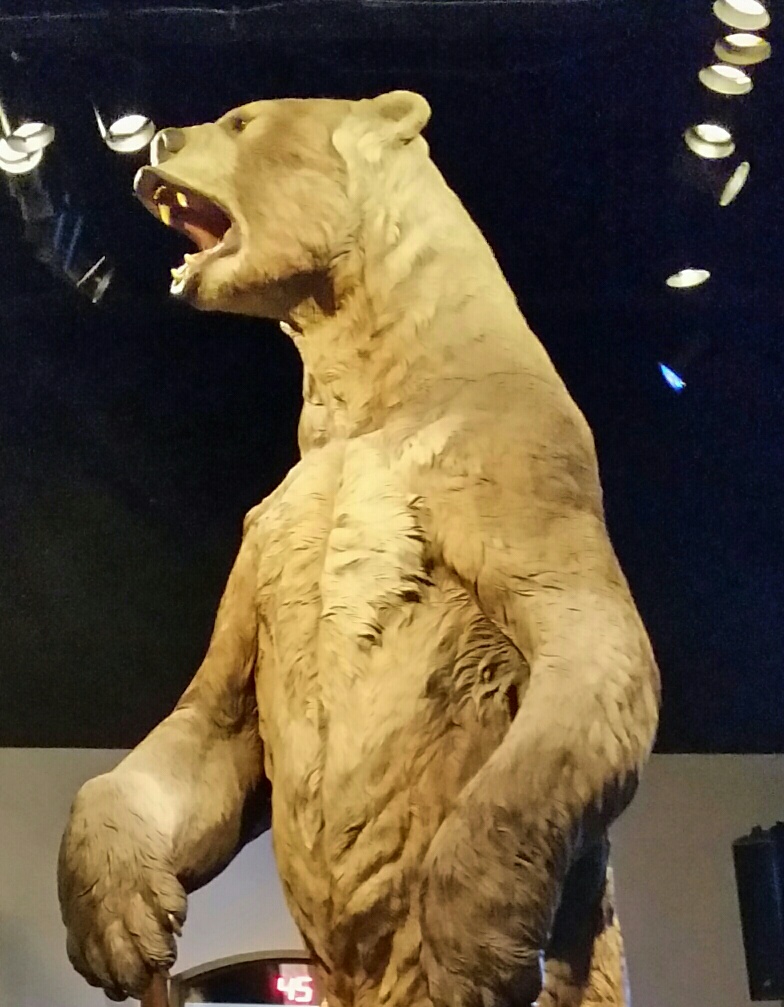
My personal thesis is that the earliest humans ate meat when they could find it and seafood and marine food; ie, clams, shellfish, fish, marine mammals. We forget that until 12,000 years ago we humans were not the apex predator. The great animals were – short face bears, dire wolves, saber tooth tigers, lions, huge hyenas. Humans had to hide on islands and protected refugees in the ice to prosper, and many groups were wiped out, again and again. On land, or in the interior, life surely was difficult, and dangerous.
It feels, a bit, as if there is a desire and urge to somehow classify we humans as somehow evolved from a peaceful, pacific species, to thus deny danger and death and suffering and tragedy.
The urge to survive is one of the strongest forces within humans. It seems that this urge is overcome, or overridden, only when a parent’s child or close relative is in imminent danger, in which case one sacrifices oneself for another, or in combat when a soldier sacrifices himself to save his friends. Except for a blood relation or combat, though, it seems the urge to survive triumphs over all else. A few years ago someone became trapped on a cliff and cut off his own arm to escape- to survive.
In the face of a deadly pandemic most people have chosen to follow whatever steps they can to survive – isolate, wear masks, and, when finally available, become vaccinated.Yet in the case of this Covid pandemic, millions of people are choosing not to take such steps, and now, with this Delta variant, tens of thousands are dying because they have refused to take the vaccine.
This counter view, that vaccines are bad, that wearing masks is weak, is held by millions, with little change despite the very clear evidence masks and vaccines either prevent catching the virus or minimize medical consequences if people do become infected. The evidence is overwhelming that deaths caused by this virus are enormously lower if people are vaccinated. Yet, still, millions refuse to take the vaccine.
The reactions to Covid are surely tribal. Most tribes of people – groups of aligned views and interests – follow the suggestions of medical experts, believing that people who must study for eight to twelve years know more about this disease than they do. There is, however, a large and intense anti-mask and anti-vaccine group, or tribe, that, despite the clear and obvious risks, nevertheless choose to welcome their exposure to that risk. This seems to be a matter of tribal belonging, identifying with this tribe, being a member. It is almost as if the need to be tribal, surely wired into we humans for group protection in the ancient past, is stronger than the urge to survive. This seems to be the case with Covid, as it was with the Jim Jones cult years ago in South America.
While appearing, initially, illogical, it may be there is a survival mechanism at place here, in that in the distant past those who held the strongest tribal ties were able to prevail over those others without such ties. In other words, maybe in the distant past there was a selection element in favor of tribal identity overpowering even the survival urge.
It seems, whether true or not in the past, this is the case today.
Every fall the bluefin tuna run into Cape Cod Bay and people go out with their boats to harpoon them. The boats are anywhere from 30 to 50 feet long, there’s a stand on the bow you go out on to “stick” the fish, which can be seen on the surface sunning itself. These fish are BIG up to 1,000 pounds and worth big money. One fish can be worth $ 20,000 and is sold fresh in the Tokyo market after being flown there overnight. So this is a short but big money fishery. One year my first skipper Sten was out there trying to get tunafish, with one sternman, but he got nothing. Not a thing, and he was a good fisherman. Meanwhile my friend Gerry, who like me was first taught by Sten, was with one Elmer Costa on his big black boat the Columbia, and Gerry and Elmer had two fish. Sten was dying of curiosity, what was Gerry and Elmer doing that Sten was not? It bothered Sten. A lot. Meanwhile the season went on and Elmer and Gerry got another fish, and by this time Sten was sort of following them around, hoping to see their trick. Their technique.
This was the same year I had shown Sten with a dowsing stick where his well was, and found his gold coin, and this also perplexed him greatly, but not as much as being outfished by someone he had trained. Gerry and I had a discussion one afternoon because we both wanted to further excite Sten, and then I called Sten and said to him, “Listen, Sten, if you want to see the trick Gerry’s using, you follow Elmer tomorrow, close, get up right by their stern and take a look.”
This Sten did, it being a foggy morning so he was able to nose in real close, and he came around the stern of the Columbia and peered through the mist and saw Gerry on the stern of the Columbia holding in his hands a dowsing stick, facing aft, the stick standing upright and held in his two hands. Sten peered closer and realized that on the end of the stick Gerry was holding was an empty Bumblebee tunafish can.
This incident gave us much amusement, but then a strange thing happened. Sten began to catch fish and Gerry and Elmer were skunked, as we used to say. Sten ended the season with one more fish than Gerry and Elmer. This confused Gerry, and me, too, and one day that winter in the coffee shop we saw Sten and asked him, what changed for him? Sten gave each of us a long heavy-lidded look and cracked a slow smile.
“You were using the wrong can,” he said. “I caught my fish not with Bumblebee but with Chicken of the Sea.”
Sten passed away in 1998, brain tumor, but until he was across the bar he always said, with a perfectly straight face, when we asked, “Of course it’s true.”
This podcast I did a few weeks ago mainly about water dowsing, telling some true tales of my experience with it. You can decide whether this is true or not.
This weekend I’m thinking about Watergate, the scandal that began when some operatives burgled a Democratic office and got caught. That happened in the run-up to the 1972 election, which Nixon won hugely, in June I believe. I was fishing then, off New England, chasing offshore lobster in Lydonia Canyon out on the edge of the shelf, maybe 120 miles from Nantucket. My skipper, Sten, who passed away in 2000, was an avid reader of Doonesbury. He had a close friend, David Martin, also long gone, who had worked on Elliot Richardson’s staff back when Richardson was instrumental in establishing the Cape Cod National Seashore. Sten followed politics, sort of, which we learned in the coming two years as you will see.
I have a very vague and dim memory of reading about the break-in. The “Plumbers,” I think they were called.
We had a very tough summer, that summer, because we had switched from long lining for cod and haddock to the lobster fishery and we were making every mistake you could make, plus fighting for bottom with other lobster boats in the deep canyons off Massachusetts. However, by the fall we started to make some money, land some big trips. We had 600 traps, in 50 trap strings, out there and we would fish those traps for a week or ten days before coming in. We had a flooded lobster hold with refrigeration. In the late fall, November, we chased the lobsters up into shoal water, 30-50 fathoms, on the slope of Georges Bank, and on December 7th a Russian fleet of four boats came upon us and our gear and nearly wiped us out, towing through the traps such that we lost 500 of the 600 traps despite our best efforts to wave them away. A little 65 foot wooden longliner against 300-foot Russian stern trawlers is no match at all.
That winter, 1972-1973, I was living in a drafty cottage in Dennis, Mass, with the remaining 100 traps stacked alongside the driveway, and while Sten chased funding for more traps I spent the winter with piles of five-eighths inch polypropylene line splicing and rigging the 50-trap “trawls” in the living room. This was a lot of splicing – splicing sections of groundline together with long splices, splicing into the line loops for the brummel hooks to attach the trawl to, splicing in the brummel hooks, and splicing the collars and loop[s and hooks for the 500 new 48 inch long lobster traps, made of plastic coated stiff wire. I’d sit in the living room with gear all over, a sharp knife, bent over, splicing. It was a long winter, cold. This was the start of the Energy Crisis, embargoes, lines at gas stations, and pundits spoke of a coming ice age.
I watched a lot of TV, the one station I could see, a black and white flickering screen, long before cable TV let alone the web, and consequently I ended up watching all the televised Watergate hearings that winter, Sam Ervin, Butterfield, John Dean, Howard Baker, endless hours of testimony about the break in. I was watching when Butterfield (I think it was Butterfield) announced that all the meetings in the Oval Office were taped. It was a sensation, pandemonium.
That spring we went back out there with the new gear and tried to recoup our losses. The Watergate thing moved along, with stories about tapes and fights for tapes, and John Dean was accused of being a traitor to the Republican cause, and all the Republicans, to a man (they were nearly all men then) howled that the entire Watergate thing was a political witch hunt. Still, a special prosecutor was appointed in the early summer of 1973, Archibald Cox, and thus began a bitter fight over tapes and their release.
Meanwhile we fished, hard, barely hanging on. Lydionia Canyon became too crowded and we heard there were a lot of lobsters being caught up on Brown’s Bank, Canadian waters off Nova Scotia, at the same time as Sten arranged with his Nova Scotian friends (half our crew were boys from Clark’s Harbor, Nova Scotia) to rig out a longliner to harpoon swordfish, which we would take aboard at sea and bring back to the US for sale, splitting the money. Swordfish was illegal then due to a mercury scare. We ended up loading all our gear on the boat, three total round trips, and moved it to the southwest tail of Brown’s Bank. The tides were awful up there and we hid in the fog and sank the buoy lines, grappling them up to haul gear using the Loran A to find it.
Big mistake, all the way around. In the end we moved the gear back to a little unnamed canyon east of Lydonia and did OK, and through the fall made a year of it.
Labor Day weekend that summer, 1973, we were between trips to our gear (which was a 16 hour steam from the boat’s base in Hyannis, Mass) and Sten asked me and Gary, another member of the crew, if we’d help him because he had agreed that weekend to take his boat to Chatham to pick up some people and then go out to Monomoy Island to the outer beach – his friend, David Martin, the wife and grown kids of Francis Sargent, former governor of Massachusetts, and Elliot Richardson and his wife. Richardson, from Massachusetts, was the Attorney General of the United States at this time, and Gary and I knew he had been under intense pressure all summer concerning Archibald Cox, Watergate, and what to do.
We picked everyone up at Stage Harbor, Chatham – I brought the boat with Gary up from Hyannis and we met Sten there – and motored about fifteen miles out to the end of Monomoy Island, where we anchored just offshore and rowed everyone in to the beach. It was more than a little intimidating to be right next to the Attorney General, and a former governor’s family, especially because Gary and I looked like long haired hippies, especially after the summer we’d had, and when we got to the beach everyone ate from the picnic basket and then Gary and I took off over the dunes because we both felt out of place and awkward. Elliot Richardson had brought fishing gear and he was setting up to surf cast. He’d be standing at the most eastern end of the Cape Cod mainland, miles from any houses or people, facing the Atlantic, Washington and the political fever far to the south.
Gary and I, over the dune and across the point that ended the island, hung around and then, because it was a hot sunny day and what the hell, went swimming, bare ass naked. The water was nice, even warm, and we were in the water a while. When we came out, though, a current had carried us one way and Elliot had come the other way, casting, and when we emerged there we were, streaming water and without clothes, ten feet from the Attorney General. Elliot was totally unfazed by us, polite. In fact I think he was delighted to be in such a contrast to the fevers back in DC.
“How was the swimming?” he asked us. “Nice. How was the fishing? Catch anything?” “That isn’t the point.” He smiled at us. We smiled back.
That fall the Watergate events heated up. Sten would, while hauling gear way offshore, tune in an AM radio so he could hear the headlines. He ran the boat out on deck on the starboard side and he could hear the radio through an open pilothouse window. I was working aft of him, emptying traps as they came from the water. Sten would yell aft to the rest of us when things happened.
“Nixon’s trying to fire Cox!” “Richardson resigned! Ruckelshous resigned!” “They’re calling it the Saturday night massacre!”
The following spring and summer, now two years since that 1972 break in, evidence mounted as some tapes were released, yet still the Republicans stood as a bloc against anything changing, stood as a bloc claiming this must be a witch hunt. However, once Alexander Butterfield said there were tapes, the witch hunt argument weakened.
That summer Nixon resigned, and he resigned because, eventually, the Republican Senators came to see the battle must be lost, the evidence was too overwhelming, and once the Senators turned, it was over, and Nixon was gone.
I am thinking of Watergate these days because, while the Watergate scandal was very different than the issues surrounding the January 6th attack on the Capitol, there has been one great similarity – months and months of solid Republican unity, unity in favor of their President or former President.
But, when Butterfield made the announcement there are tapes, early on, I sensed then that the character of the situation had changed materially, so now with the release of phone records and text messages, speculation must now shift to awareness and reality. It is hard to claim a political witch hunt in the face of evidence, visible to all.
It feels, right now, very much the way it felt at the end of July, 1974, when evidence became a torrent and it was abundantly clear laws had been broken. I have said to myself throughout this latest January 6th event that unless and until members of the former Presidents party accept evidence as true and significant, little can and will change. This has been especially the case even though Liz Cheney and Adam Kinzinger have shown great courage to pursue the truth, but them alone.
It feels, this February 9th, based first on Mitch McConnell’s statements right after the papers were released to the Committee about seeing where the investigation leads, and then the other day coming out and forcefully stating the January 6th events were an effort to overturn the election, something might be shifting. Not much has shifted so far, but a few Republicans are coming forth to back McConnell, although at this point it seems clear they are doing this mostly to protect their own backsides than because those acts that day were sedition or treason
Back in the late summer of 1974 I had no idea, standing embarrassed and naked before the U.S. Attorney General, surely facing the decision of his lifetime, that I was standing before a true and real American hero. But I was. I am lucky for that. We all are. Now, nearly a half century later, every day, it seems, more evidence comes forth – the use of burn bags to destroy records, efforts to flush papers down the toilet, call logs and notes linking together a very broad conspiracy. What is still missing, though are any heroes, men or women who will stand before the flame and speak truth.