A Budget Approach That Works

How to solve the fiscal crisis and avoid financial catastrophe – a common-sense, practical nonpartisan approach that will actually WORK!

The Unity Plan: A Citizen-Driven Call for Fiscal Stability
April 29, 2025 | Charlie Sheldon, Tacoma, WA (toklatcharlie@gmail.com)

The Unity Plan, a citizen-driven proposal presented to Rep. Emily Randall’s office on April 28, 2025, seeks to counter the House Plan’s fiscal recklessness (216% Debt-to-GDP by 2050, $3.482T deficit in 2026, CBO) by projecting a balanced budget by 2054, 87% Debt-to-GDP, 174M jobs, and Social Security solvency for 50–75 years, shielding 89% of taxpayers from tariff shocks ($3,998/household, Treasury). It urgently requests CBO analysis to validate these projections.

Key Features (2026, Projected):

  • Revenue ($3.696T): 40% top tax rate (+$112B), $50K itemized deduction cap (+$150B), $75K standard deduction (-$786B), 25% corporate tax (+$200B), $520K Social Security cap (+$120B). No tariffs ($0).
  • Spending ($6.44725T): Hold discretionary spending to 2.6% growth ($65.1B savings), $100B Medicare efficiencies ($50B drugs, $50B fraud), $150B IRS tax gap recovery, $3T infrastructure via off-budget Unity Bonds ($60B start).
  • Outcomes: $2.75125T deficit, 127% Debt-to-GDP, 165.1M jobs.

Long-Term Projections (Pending CBO Review):

  • 2050: $0.4T deficit, 87% Debt-to-GDP, $77.3T debt, 174M jobs.
  • 2054: Balanced budget, $0.3T surplus.
  • Social Security: Solvent for 50–75 years (SSA).
  • Option: 1.6% Financial Transactions Tax (+$30B/year) could balance by 2053, reduce debt to $74.7T.

Why It Matters: Unlike the House Plan’s perpetual deficits and elite tax cuts, the Unity Plan aims to rebuild infrastructure, boost middle-class cash ($2,000–$10,000/year), and avoid fiscal collapse, pending CBO validation to confirm its bipartisan appeal (Treasury, SSA).

Call to Action: Urge Congress to request CBO analysis of the Unity Plan. Contact Rep. Emily Randall’s D.C. office (202-225-7761) or CRFB (info@crfb.org) to champion this Tacoma-led solution.

Request for Congressional Budget Office Analysis: Unity Plan (No Tariffs, 40%)

April 29, 2025 | Citizen Proposal by Charlie Sheldon, Tacoma, WA (toklatcharlie@gmail.com)

1. Introduction and Purpose

The Unity Plan (No Tariffs, 40%), presented to Rep. Emily Randall’s office on April 28, 2025, is a citizen-driven proposal to address the fiscal challenges posed by the House Budget Plan, which the Congressional Budget Office (CBO) projects will yield a 216% Debt-to-GDP ratio by 2050 and a $3.482T deficit in 2026 (CBO, 2025, p. 54). The Unity Plan projects balancing the federal budget by 2054, achieving a $0.3T surplus by 2055, reducing Debt-to-GDP from 127% (2026) to 87% (2050), creating 174M jobs, and ensuring Social Security solvency for 50–75 years, while shielding 89% of taxpayers from tariff shocks ($3,998/household, Treasury, 2025). This document requests CBO analysis to validate these projections, comparing them to the House Plan’s outcomes. It details 2026 fiscal impacts, long-term projections (2030–2050), an optional Financial Transactions Tax (FTT) scenario, implementation mechanics, and sensitivity analyses, using methodologies from CBO, Treasury, and Social Security Administration (SSA) reports.

The Unity Plan excludes tariff revenue ($0), relying on progressive tax reforms (40% top rate, $520K Social Security cap), spending restraint (2.6% discretionary growth), and efficiencies ($315.1B/year by 2027). It proposes $3T in off-budget infrastructure bonds to rebuild roads, housing, and communications, creating 3M jobs by 2050. This request seeks CBO’s expertise to assess revenue, spending, deficits, debt, jobs, and Social Security solvency, ensuring the plan’s viability as a bipartisan alternative to the House Plan’s unsustainable trajectory.

2. Fiscal Impacts for 2026

The Unity Plan’s 2026 projections are based on CBO’s 2025–2035 baseline (CBO, 2025, p. 12), adjusted for proposed policies. All figures are in trillions (T) or billions (B) of 2025 dollars, with methodologies aligned with CBO and Treasury standards.

2.1 Revenue ($3.696T)

  • Individual Income Taxes: $1.626T
    • Baseline: $1.3T (2025, scaled at 4.4% nominal growth, CBO p. 12).
    • Adjustments: +$112B (40% top rate on $3.8T above $695K, CBO p. 45), +$150B ($50K itemized deduction cap, CBO p. 48), -$786B ($75K standard deduction for 130M filers, CBO p. 45).
    • Formula: $1.3T × 1.044 + $112B + $150B – $786B.
  • Corporate Taxes: $0.5T
    • Baseline: $0.3T (CBO p. 12).
    • Adjustment: +$200B (25% rate on $5T taxable income, CBO p. 12).
  • Payroll Taxes: $1.48T
    • Baseline: $1.36T (CBO p. 12).
    • Adjustment: +$120B (12.4% Social Security tax to $520K cap, SSA p. 106).
  • Other Taxes: $0.09T
    • Excise and estate taxes, no tariffs ($0, CBO p. 12).

2.2 Spending ($6.44725T)

  • Mandatory Spending: $4.068T
    • Social Security: $1.37T (CBO p. 54).
    • Medicare: $0.96T (baseline $1.01T – $50B phased efficiency: $25B drug negotiations, $25B fraud recapture, CBO p. 68).
    • Other: $1.738T (CBO p. 54, scaled at 4.4%).
  • Discretionary Spending: $1.811T
    • Defense: $871B (baseline $849.8B × 1.026, saves $12.7B vs. 4.1% growth, CBO p. 54).
    • Non-Defense: $940B (baseline $1.942T × 1.026 ÷ 2, saves $52.4B vs. 5.3% growth, CBO p. 54).
  • Net Interest: $0.53325T
    • $35T debt × 2.5% average interest rate (CBO p. 14).
  • Infrastructure: $60B
    • Off-budget Unity Bonds, ramping to $200B/year by 2028 (Treasury, 2025).
  • Enforcement: $2.5B
    • $5B phased for IRS and Medicare fraud staff (~25,000 at $100K/year, CBO p. 52).
  • Inflation Adjustment: $32.5B
    • 0.5% on $6.15T baseline spending (CBO p. 54).

2.3 Savings ($190.1B, Phased)

  • Discretionary Savings: $65.1B
    • Hold Defense and non-defense to 2.6% nominal growth (2026–2030, ~2–3% real cut/year, ~10–15% over 5 years, CBO p. 54).
    • Calculation: Defense ($883.5B – $871B = $12.7B), non-defense ($992.4B – $940B = $52.4B).
  • Medicare Efficiencies: $50B
    • $25B drug negotiations (generics, bulk purchasing), $25B fraud recapture (AI audits), phased 50% in 2026, full $100B by 2027 (CBO p. 68).
  • IRS Tax Gap Recovery: $75B
    • $150B phased 50% from $400B tax gap via audits and AI tools (CBO p. 52).

2.4 Outcomes

  • Deficit: $2.75125T ($6.44725T – $3.696T).
  • Debt-to-GDP: 127% ($36.83465T ÷ $31T GDP, CBO p. 36).
  • Jobs: 165.1M (+0.8M from infrastructure bonds, CBO p. 36).

3. Long-Term Projections (2030–2050)

The Unity Plan projects fiscal outcomes through 2050, using CBO’s long-term methodology (CBO, 2025, p. 12). Revenue grows at 5.1% (2026–2027), 5.5% (2028–2042), and 4.5% (2043–2050), reflecting economic growth and policy impacts. Spending peaks at $6.7T (2042), declining to $6.5T with sustained savings. GDP grows at 2.5% real (CBO p. 36), reaching $88.89T by 2050.

YearDeficit ($T)Debt ($T)Debt-to-GDP (%)Jobs (M)
20302.6644.75120166
20401.8660.298171
20500.477.387174
  • Debt Calculation: $35T (2025) + $42.3T cumulative deficits – $0.3T surplus = $77.3T (2050).
  • Balance: Achieved in 2054 (revenue ~$10T, spending ~$6.5T).
  • Social Security: $520K cap ensures solvency for 50–75 years (SSA, 2024, p. 106).
  • Jobs: 174M by 2050, including 3M from $3T infrastructure (CBO p. 36).

4. Optional Financial Transactions Tax Scenario

An optional 1.6% FTT on $1,875T trading volume (25% reduction, 25% noncompliance, SIFMA, 2025) could enhance fiscal outcomes, appealing to progressive stakeholders while maintaining bipartisan tax structure.

  • 2026 Impact: +$30B revenue ($3.726T total), -$30B deficit ($2.72125T).
  • Long-Term: Balances 2053, debt $74.7T (2050), Debt-to-GDP 84% (-3%).
  • Methodology: CBO p. 45, scaled from 0.1% FTT estimates.

5. Comparison to House Plan

The House Plan, as analyzed by CBO (2025, p. 54), sustains deficits and debt growth, with minimal savings. The Unity Plan’s projections offer a stark contrast, pending CBO validation.

Metric (2050)Unity Plan (Projected)House Plan (CBO)
Deficit ($T)0.44.68
Debt ($T)77.3175.3
Debt-to-GDP (%)87216
Jobs (M)174171
Balance Year2054Never
  • House Plan (2026): $3.185T revenue ($1.505T individual, $0.3T corporate, $1.3T payroll, $0.09T other), $6.667T spending ($4.118T mandatory, $1.854T discretionary, $0.695T interest), $88B non-defense savings (CBO p. 54).
  • Unity Advantages: $315.1B savings ($65.1B discretionary, $100B Medicare, $150B IRS), $3T infrastructure, middle-class cash ($120,938 at $125K income vs. $108,726, Tax Foundation, 2025).

6. Implementation Mechanics

6.1 Unity Bonds ($3T, 2026–2042)

  • Structure: Off-budget, voluntary bonds sold to public ($60B in 2026, $130B in 2027, $200B/year 2028–2042), with $12.1875B/year from wealthy households ($5K × 3.25M) and remainder from markets (Treasury, 2025).
  • Inflation Control: Removes 0.27%–0.9% of M2 (~$22T), capping CPI at ~0.5% (vs. 4.5% if printed, BLS, 2014).
  • Redemption: 2036–2052 at $200B/year, 2.5% interest ($5B/year).
  • Administration: 500 Treasury staff ($50M/year), $10M/year ads, amend Title 31 USC.

6.2 Discretionary Spending Restraint

  • Mechanism: 2.6% nominal growth (2026–2030, ~10–15% real cut over 5 years), saving $65.1B/year vs. 4.1% (Defense) and 5.3% (non-defense) baselines (CBO p. 54).
  • Challenges: Resistance from defense contractors (e.g., Lockheed Martin, $70B contracts) and social program advocates (e.g., NEA, $20B education budget).

6.3 Enforcement Investments

  • Staffing: 25,000 hires ($5B/year, $2.5B in 2026) for IRS audits and Medicare fraud detection, recovering $150B (tax gap) and $50B (fraud) by 2027 (CBO p. 52).
  • Technology: AI compliance tools and bulk drug purchasing systems.

7. Sensitivity Analysis

To ensure robustness, the Unity Plan’s projections are tested under alternative assumptions:

  • Higher Interest Rates (3.5% vs. 2.5%): Increases 2050 debt to $82.1T (+$4.8T), Debt-to-GDP to 92% (+5%), delays balance to 2056.
  • Lower GDP Growth (1.8% vs. 2.5%): Debt-to-GDP rises to 94% (+7%), balance shifts to 2055.
  • Reduced Savings (50% efficiency): $157.55B savings ($32.55B discretionary, $50B Medicare, $75B IRS) increases 2050 debt to $80.9T (+$3.6T), Debt-to-GDP to 91% (+4%).
  • FTT Inclusion: As noted, reduces debt to $74.7T, balances 2053.

The Unity Plan requests CBO analysis to:

  • Validate revenue projections ($3.696T in 2026, $10T by 2054), including tax reforms and Social Security cap impacts.
  • Assess spending projections ($6.44725T in 2026, $6.5T by 2054), focusing on discretionary restraint, Medicare efficiencies, and IRS recovery.
  • Confirm deficit and debt trajectories ($2.75125T deficit in 2026, 87% Debt-to-GDP in 2050, balance by 2054).
  • Evaluate job creation (174M by 2050, including 3M from infrastructure).
  • Test Social Security solvency under the $520K cap (50–75 years, SSA p. 106).
  • Analyze the $3T Unity Bonds’ fiscal and inflationary impacts, comparing to WWII bond precedents (Treasury, 2025).
  • Compare outcomes to the House Plan, assessing bipartisan viability.

This analysis will confirm the Unity Plan’s feasibility as a Tacoma-led solution to the fiscal crisis, countering tariff shocks and House Plan deficits, and inform congressional action by July 2025.

9. References

The platform I’d like to see…..

Term limits for Congress people – 5 terms for Senate, 15 for the House (30 years):

Anyone in Congress must put all stocks in a blind trust and nobody in Congress, or immediate family members, can buy or sell stocks while in office;

Anyone serving in Congress cannot work as a lobbyist for 10 years after leaving office;

Corporations are no longer “people” and corporate money contributions to elections prohibited – individual contributions only, limited per donor, PACS forbidden;

Election Day becomes a Federal Holiday;

People are registered to vote at birth, when they receive their Social Security number, and automatically enrolled when they reach the age of 18

Electronic voting machines are removed and all ballots are paper and counted by hand;

There is a universal two year National Service requirement for all citizens, either military or equivalent work (such as aides in mental hospitals, conservation projects, assisting in schools) with everyone subject to military draft as one of the service components;

For the next 5 or 10 years virtually prohibit immigration except for those fleeing desperate conditions such that US residents or national service workers will fill available openings while at the same time increasing the Federal minimum wage to, first, $ 15 an hour and in 10 years at least $ 20 an hour

Create as much manufacturing domestically as possible using aggressive “buy American” standards on conditions favorable for workers to organize or establish worker-owned enterprises;

Return to the graduated tax structure as under Eisenhower in the late 1950s – According to records compiled by the Tax Foundation, a single person making $16,000 in 1955 — that’s $178,000 in today’s dollars — had a marginal tax rate of 50%; compensation of $50,000 ($559,000 today) moved you into the 75% tax bracket; and an income of $200,000 ($2.3 million today) put you in the 91% tax bracket. (Jan 30, 2019 figures adjusted by 19 percent inflation since then to today);

Remove Social Security taxation income limits;

Reduce military spending and establish Medicare for all for everyone in the United States;

Tax any religious organization that engages in politics;

Carry Federal judicial ethics standards to all US Federal courts including rhe Supreme Court;

Properly fund the IRS to adequately collect entitled tax revenues;

Return civics courses to all public schools;

Embark on national program to develop safe and sustainable hydrogen energy systems as a way to maintain our energy-intense modern society with the most abundant fuel source we have;

Close nearly every overseas U.S. military base;

Apply existing anti-trust and regulatory rules to maintain competition and avoid monopoly capture;

Re-establish affirmative action fir those groups suffering systematic racism and re-establish through legislation Roe v Wade conditions.

Some further thoughts:

Public school tax receipts limited to public schools, not charter schools;

Only those who can pass the citizen test immigrants must pass to become US citizens are allowed to vote in US elections; ie voters should study and take the test, too;

Establish tight control of AI development similar to that now used to oversee and control nuclear development;

A need to establish and implement a decades-long program to repair and maintain dams, piping systems, water infrastructure, forest fire safety, water supplies, possibly using national service workers, among others;

In all cases work to establish an economic system based on sustainability, re-use, minimal resource extraction, and assurance that tail-end impacts of actions are the responsibility of those taking those actions.

Further evidence – ancient seafaring

Check out this article arguing that ancient humans reached some islands in the Mediterranean sea as long ago as 450,000 years, by boat, not on foot. If this is true, those humans were not modern homo sapiens but homo erectus, suggesting that hominids became capable sailors hundreds of thousands of years ago. If this is true (and I believe it is) then all theories about human migration need to fully explore the notion humans sailed the coast and among islands, out of sight of land, just as often, if not more often, than undertaking long journeys over land. This makes sense, if you think about it, because during these times there were many periods when great ice sheets covered the land, not to mention all the enormous meat eating predators who were, then, the apex predators – short face bear, dire wolf, cats…..

https://www.sciencedirect.com/science/article/abs/pii/S1040618222002774

Becoming lost in the woods….

Have you ever been lost in the woods? These days most of us, when we become lost, are more likely than not wandering an airport or big public parking garage looking for our vehicle. Right?

I’ve never been really lost out there. There are stages of lost-ness, I think. There is the “lost the trail” lost, which means wandering off a trail without realizing and then trying to find one’s way back. This is how most people get truly lost, this way, I think. I met a guy in my writing class in 2013 who went into the Olympics and started up the Three Lakes Trail toward Skyline ridge in the southwest Olympics, off the Quinault, and somehow missed a turn and ended up lost for five days. He got out OK, chilled, but that’s a long time to be missing. So he went from “lost the trail” to being really lost, but of course knowing the general area he was in. Then there is the totally lost condition, not even knowing the general area, this coming when say a plane crashes in the wilderness somewhere and you survive.

But, three times, I wandered off trail and was for a time “lost.” I wasn’t lost for long the first time. I was hiking up to Dodger Point and, low down, the trail jogs sharp left and up to start up the ridge after crossing the Elwha (I think that’s where it was, it was 25 years ago) and I kept going ahead, on the open forest floor, until say thirty yards in I realized I wasn’t on the trail any more. That was startling. An interesting thing happens to you when you lose a trail, or to me, anyway. Everything shifts. That first time I backtracked and sure enough found the jog right away.

The second time I was lost could have been more serious. I was alone, up on the Skyline Trail, July Fourth weekend a year with little snow, absolutely alone, my second day in, way up high past Kimta Peak, the next pass, maybe Hee Haw Pass? Anyway its rocky and bare up there, cairns, but enough snow to cover the cairns, and the trail there wanders down this rocky defile a ways then also jogs left over a little deep creek, but the ground is open and well trod and so I missed that jog and wandered this way, then that, and always the trail petered out. I am way in, it has just started to rain, and it then rained for three days, never been up there before, and now cannot find where the trail goes. That time it took me a half hour to find the jog and the trail. I knew enough to know that when you lose the trail you backtrack, first, and second you don’t go wandering off without a real clear idea of how to get back, because it’s rough country up there and if you get off far enough, down say a steep side hill, then you can get turned around and then you are lost, like my classmate got lost.

The third time is embarrassing. I had a new pair of boots, and hoped they were broken in. I had walked in them and gone up and down gravel sidehills with them, but they were new and I knew they were not yet ready, but it was a nice day, sunny, dead clear, I had the day off, and the Brothers beckoned, so I drove to the trailhead to Lena Lake, was on the trail by 6am, and tried to climb the Brothers. This, like the two events above, was the first or second year I was out here, maybe 30 years ago. I was younger than now and felt strong and was really stupid because right away I knew the boots weren’t ready but, dammit, the day was FINE, so on I went. The climber’s path to some campsites in the Valley of Silent Men is pretty easy to follow, and then you get above trees and I climbed up and up and up, in the hot sun, feet starting to burn, now, but dammit I was close! I reached the final summit block, where it gets a little exposed, and by now I know my feet are gonna be a big problem. I turned around maybe 200 feet below the summit and worked my way down to the campsites off the rock, which took a damn long time, several hours,  and when I got down there I got all turned around. I stopped and thought, I should take my boots off, but knew if I did I’d never get them on again. But somehow I got turned around and could not find the path down to Lena Lake. This took me two hours, wandering and looking. I was in a lot of pain and feeling stupid and not too rational, probably seriously dehydrated, nobody else around all day, afraid to remove my boots. That time, for a half hour, I was afraid I was really lost, wandering the woods, maybe getting further and further from the trail, and that was scary and sobering. I stopped and sat and took some breaths and relaxed, drank water, and checked the sun, the slopes, and found the trail.

I got back to my car at 7pm, 6000 vertical feet up and 6000 vertical feet down later, and when I took off those boots the skin on my feet up to my ankles came off too.

This was the first of several embarrassing boot stories, but (hopefully) the last of my lost stories, all of which were many years ago. But, still, that shift, that change, when you realize you don’t know where you are –  that gets your attention.

The Well of Time Series

Covid has delayed production of Totem for a year, which is fine, because during these months of isolation and home-bound-ness I have returned to a feeble hobby I enjoyed greatly decades ago, drawing sketches. This year, too, has been a chance to get back into the mountains for hiking, but these days I am slower, and tend to spend fewer hours a day under a pack, walking, leaving time to stop, observe, and draw whatever I see along the way. It used to be, for years, the definition of a decent hike was how blown you were at the end, how damaged, how great the pain, but age, while not removing the pain, has at least allowed enough small wisdom to be a little more conservative. Your scribe was never the brightest bulb in the room. So, hence, I have taken to drawing along the way, with pencil, or ink, small 5 inch square heavy paper sheets, easy to store in a back pack. The drawings are feeble, primitive, and reveal an unsettling mind, but they have been fun. My wife suggested, when I came back from one such hike last spring, perhaps I could draw a story with these panels, share it with our small tribe of grandchildren and nieces and nephews, or grand-nieces and nephews. This seemed like a fine idea, and so I did so, with the idea I could have a Zoom meeting with the widely scattered wee ones and tell the story in real time over the screen. Then, to increase their anticipation, my wife suggested that maybe I could send a story panel, once completed and copied, to each of the kids so when they watched the story then could also be holding part of it in their hands, waiting then to see where it fell in the tale.

This I did. It was (and is) a lot of work, hours, but great fun. I took heavy watercolor paper and cut it to fit in business sized envelopes, then drew the panels and mailed them to the kids after photographing them on my phone, cropping them, and then storing them on my computer such that I could prepare a PowerPoint slide show, but a slide show of drawings, pictures, which I then can run through, live, on Zoom, telling the tale picture by picture. The first time we did the Zoom event I hadn’t even finished the first story, but it was a way to tell the kids and their parents, my own kids and cousins, what to expect, and to get them ready for the pictures appearing in their mailbox. It is also possible to record these Zoom events, which means, I can then take the recorded tale and get it up on You Tube and send that, too, to each wee one, such that they have the story to watch again if they wish, at their pace and speed, but also available for those kids who may be unable to make the Zoom meeting.

Years and years ago when my own kids were little, at Christmas I would buy a lot of cheap – I mean, CHEAP – little plastic figurines of animals and dinosaurs and monsters and wrap them, one apiece, to the kids who would be present, usually three or four kids and their cousins, and with each tiny present was a card upon which I wrote a 3×5 chapter of a tale, one by one, such that as the other presents were opened a story was being told to all the kids, involving them. This was something that was a much bigger success than I expected. Then, a bit later, I began telling stories to my son Jack to put him to bed, when he was very little, in a crib, still, and these stories were about a young lad named Roland and him finding a hollow in a tree which was a Well of Time, a way to go into the past. I told him many such stories,all of which he has forgotten, which is probably good because I believe I was inhaling back then.

Now, fast forward 35-45 years, and it is another generation of wee ones, everything on flat screens, everything provided, and due to this pandemic everyone desperate for new material. These new stories, drawn on paper, copied, then shown via Zoom and Powerpoint while narrating the tale, have been much liked by the wee ones, whose minds are perhaps s twisted as my own.

Then, in November, one of the kids, the oldest one, actually, Ollie, sends me a drawing he has made and says, maybe you can put this in your next story, and this seemed like a fine idea, so I solicited drawings from all the other kids, whatever they wished, and then drew a story which included their characters and drawings, too. This was even more work, but great fun, great fun.

So it seems that just as I have finished one series, the Strong Heart Series, three books about the Pacific Northwest, ancient history, an ornery young girl and her companions, I have now embarked on another: The Well of Time series. This blog post here was started years ago simply as a great place to store the stuff I enjoyed and had fun with, and if someone gets into it and enjoys it, fine. Now the Well of Time tales, those done so far, are on this blog too, just along the bottom of this site, available to anyone who wants to watch them.

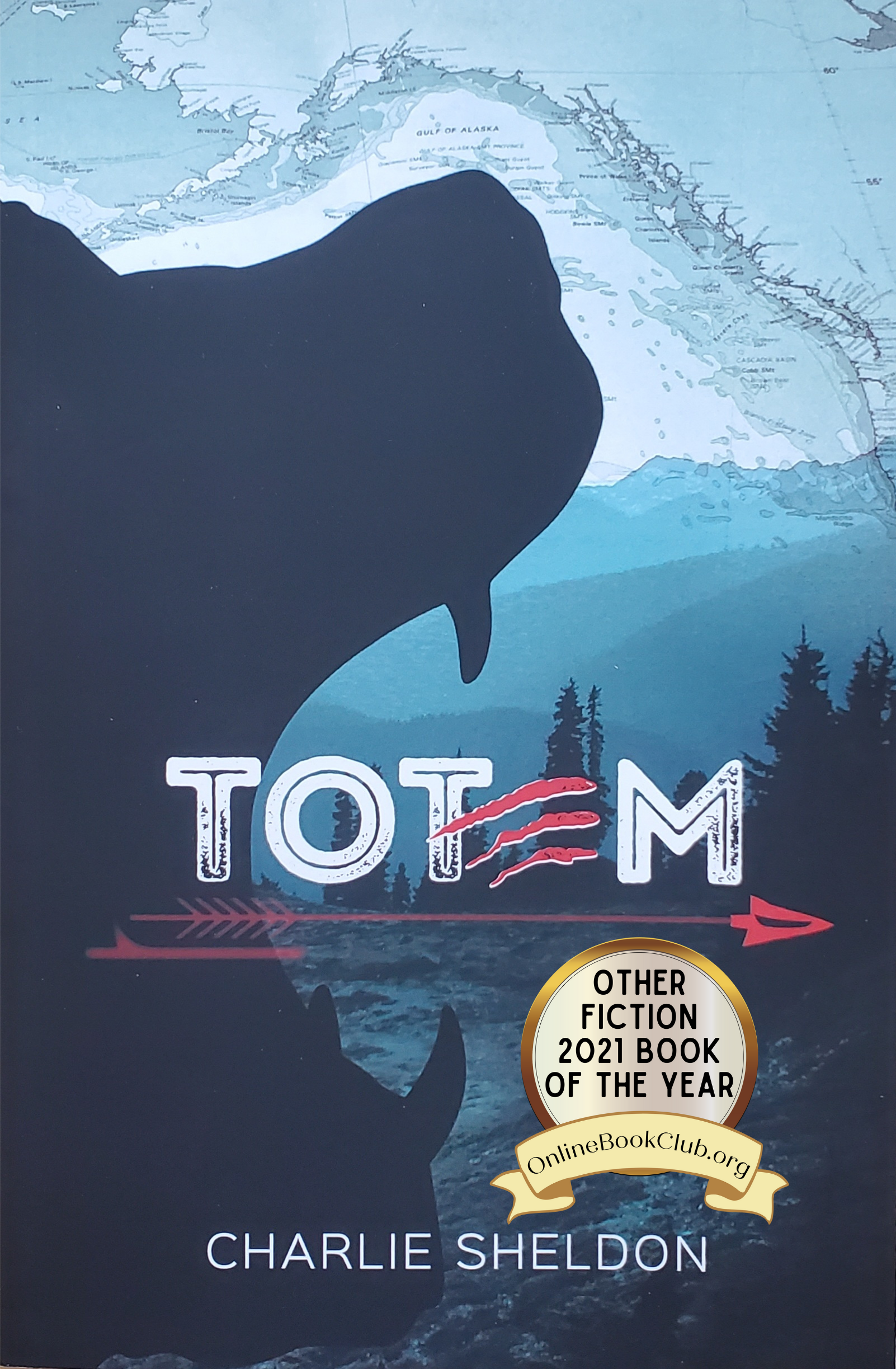
When I finished Totem I knew I had completed the first series, in three tales. I suspect the Well of Time tales might carry on a bit longer. I would say, as far as the pandemic goes, there could have been many worse ways to pass the time.